
TAAHP has endorsed the Dignity Act of 2025, H.R. 4393, a bipartisan workforce and immigration reform bill led by U.S. Rep. María Elvira Salazar (R-FL-27) and U.S. Rep. Veronica Escobar (D-TX-16).
The Dignity Act of 2025 would create a legal work authorization process for certain long-term undocumented workers who meet strict requirements, while also including enforcement provisions such as nationwide E-Verify, border security investments, asylum reforms, and funding for workforce training. TAAHP joins the National Association of Home Builders (NAHB) and a broad coalition of construction, housing, and business organizations in support of the bill.
TAAHP’s endorsement reflects a clear housing production concern. Texas cannot meet its housing demand if construction labor shortages continue to delay construction, increase costs, and strain development budgets. Supporting the Dignity Act is one way to help protect the skilled workforce Texas needs to keep housing production moving.
Construction labor shortages are already affecting the pace and cost of housing development across the country. NAHB estimates that the U.S. will need 2.2 million new skilled construction workers over the next three years to help close a housing deficit of roughly 1.5 million homes. At the same time, the construction industry is already short an estimated 200,000 to 400,000 workers.
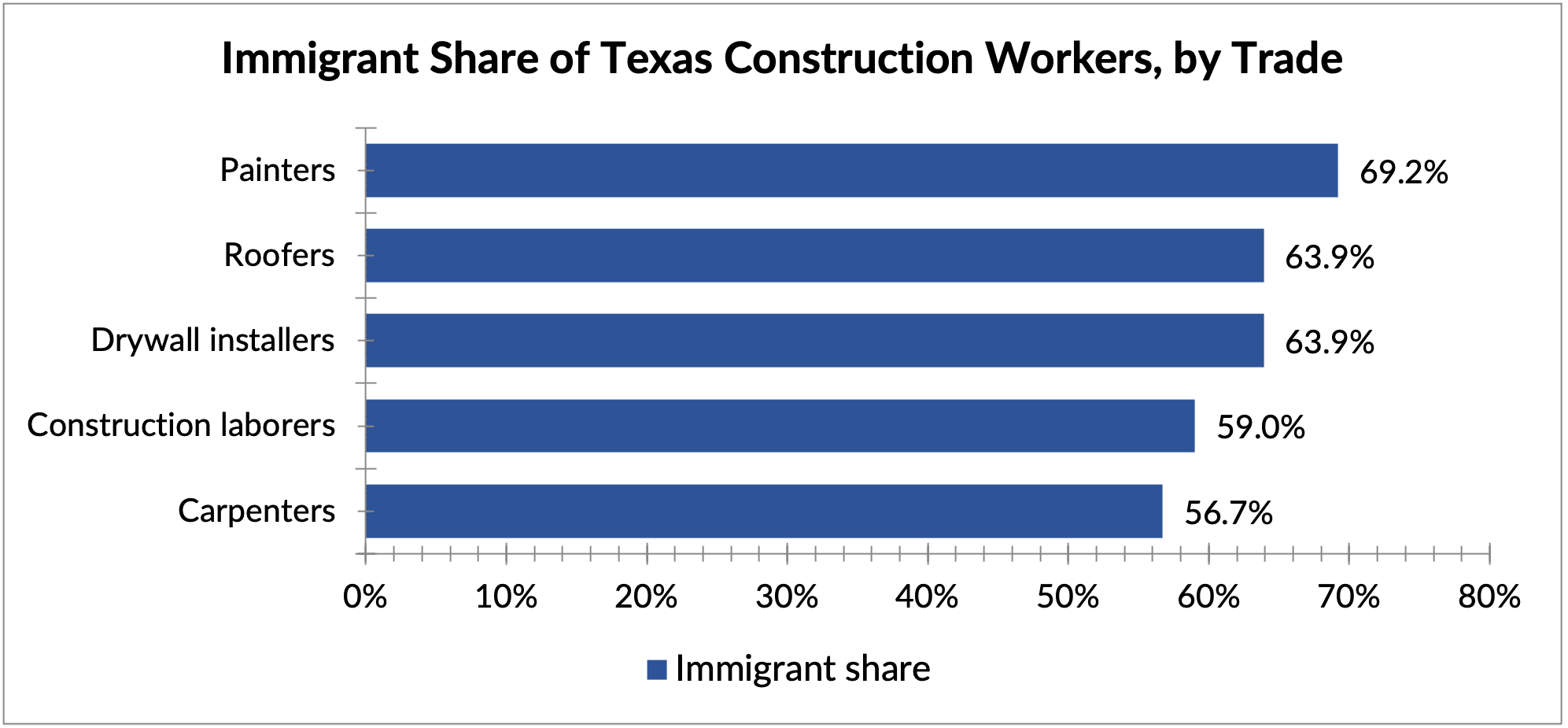
In Texas, the labor picture is especially important. According to the American Immigration Council’s Empowering Texas report, more than 507,700 immigrants worked in the state’s construction sector in 2022, representing 40 percent of all construction workers. It also found that immigrants make up the majority of workers in several trades central to housing construction, including painters, roofers, drywall installers, construction laborers, and carpenters.
The Houston region shows the same issue in even sharper terms. In 2022, 180,500 immigrants worked in the Houston metro construction industry, representing 51.3% of all construction workers in the sector. For a state working to address major housing demand, those numbers matter. A stable construction workforce is directly tied to housing supply, project delivery, and cost control.
The Dignity Act pairs a federal workforce solution with clear requirements. Undocumented workers who arrived before December 31, 2020, could earn temporary legal work authorization through a seven-year Dignity Program if they pass a criminal background check, follow federal and state law, repay back taxes, keep paying income taxes, and make restitution payments. After completing the program, they could apply for renewable Dignity Status. The bill creates no path to citizenship and no eligibility for federal means-tested benefits.
The bill also includes nationwide E-Verify, border security investments, asylum reforms, and steps to clear green-card backlogs for workers already approved under current law. Restitution payments fund the American Worker Fund, which supports training and apprenticeships for American workers.
The Dignity Act has earned support from more than 60 national organizations, including NAHB, Associated General Contractors of America, the American Seniors Housing Association, LeadingAge, the U.S. Chamber of Commerce, the Business Roundtable, the Greater Houston Partnership, and the Texas Business Leadership Council.
TAAHP will continue to support practical federal, state, and local solutions that help our members build the housing Texas needs.